Beyond the Audit: Building a Psychosocial Safe Workplace Every Day

As Used & Trusted


You may have completed your psychosocial audit and addressed the obvious issues. But that is only the starting point.
The real test is whether your workers can recognise psychosocial risks, raise concerns early, and act when something is not right. Increasingly, that is what regulators want to see—not simply whether awareness training was delivered once and then left.
Compliance is a Daily Practice
Most organisations begin well, they engage with service providers to undertake risk assessments, develop policies, hold leadership sessions, and develop corrective actions. These are necessary and expected, but they do not, on their own, create a psychologically safe workplace.
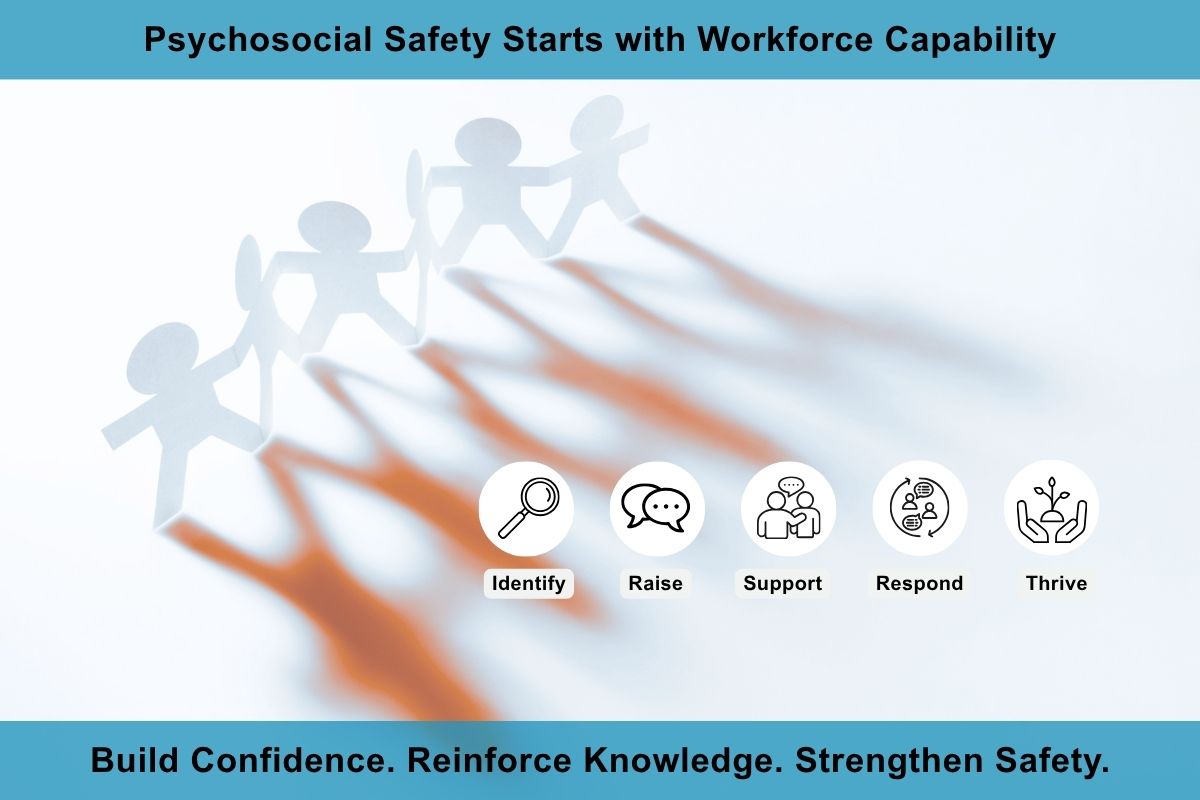
Psychosocial safety is built in everyday moments: conversations, behaviours, and decisions made under pressure. Policies alone do not keep people safe; capability does.
Workers Need Practical Strategies, Not Just Policies
Staff are often the first to notice psychosocial hazards such as:
• excessive workloads
• bullying or inappropriate behaviour
• fatigue and burnout
• poor communication
• unclear roles
• lack of support
• exposure to trauma
• conflict or tension.
Yet many people stay silent because they may:
• not know what counts as a psychosocial hazard
• not know how or when to report
• fear repercussions
• lack confidence
• assume “this is just how it is”.
This is where organisations need to shift from passive compliance to actively building workforce capability.
Awareness Must Be Continuous
Psychosocial safety is not created in a single training session. It develops through regular, practical reinforcement that helps workers:
• recognise risks early
• spot signs of stress and burnout
• escalate concerns appropriately
• support colleagues
• manage conflict
• build resilience
• understand their role in maintaining safety.
Short, frequent, microlearning is far more effective than annual training alone. When knowledge is reinforced regularly, people are more likely to apply it.
Speaking Up Early, Changes Outcomes
A key sign of psychological safety is whether workers feel able to raise concerns early, before issues escalate.
Organisations must actively promote:
• early reporting
• respectful conversations
• accessible managers
• non punitive escalation
• supportive intervention.
Psychosocial risks rarely emerge all at once. They tend to build gradually through pressure, behaviour, or unresolved tension. Early intervention can reduce harm, absenteeism, turnover, and costly claims.
Leadership Sets the Tone
Workers pay close attention to leadership behaviour. When leaders model openness, empathy, and accountability, the broader workforce is more likely to do the same.
Leaders must be able to:
• spot behavioural changes
• have supportive conversations
• manage workloads
• respond consistently
• reinforce respectful standards.
Leadership behaviour sends one of the strongest cultural signals in any organisation.
Regulators Now Expect Demonstrated Capability
Across Australia, regulators are moving beyond asking, “Did you train your staff?” They now want to know whether staff can demonstrate that they understand psychosocial risks and know how to respond.
In practice, this means having evidence that:
• workers understand hazards
• information is reinforced regularly
• competency is maintained
• reporting pathways are clear
• staff can respond appropriately.
This is why continuous learning models are becoming essential rather than optional.
A Safer Workplace Is Built Over Time
Psychosocial safety is not achieved through an audit, a workshop, or a policy alone. It is built through:
• consistent education
• open communication
• capable leadership
• empowered workers.
The organisations most likely to thrive are those that move beyond tick-the-box compliance and build genuine capability, confidence, and awareness across their workforce.
Training workers to recognise psychosocial hazards is important, but awareness alone is not enough. Organisations must also act on the issues raised. The strongest psychosocial risk management programs combine workforce capability with organisational accountability, ensuring concerns lead to meaningful action and continuous improvement.
A psychosocially safe workplace is not just about avoiding penalties. It is about creating an environment where people can perform, contribute, and thrive every day.
The encouraging news is that quality microlearning providers are already helping organisations reduce risk, strengthen compliance, and improve workers’ day-to-day experience.
To enhance your readiness and organisational capability, we are sharing a complimentary psychosocial hazard audit readiness checklist created by industry specialist Nick Lee OAM, of HeathyMinds, a leading creator of evidence-based mental health and wellbeing programs.
Blog Related


The 5-Minute Mentor: Evidence-based Learning Insights
Transform your team with monthly microlearning insights you can implement immediately.
