Cost Effective. Engaging. Evidenced Based
Forget Me Not® transforms psychosocial safety training with daily microlearning that builds mastery, confidence, and lasting behavioural change.
Forget Me Not® — Building Mastery in Psychological Safety
Psychosocial hazards and risks affect every industry. Hazards like bullying, unreasonable job demands, lack of role clarity, sexual harassment, and poorly managed workplace change undermine wellbeing, productivity, and safety.
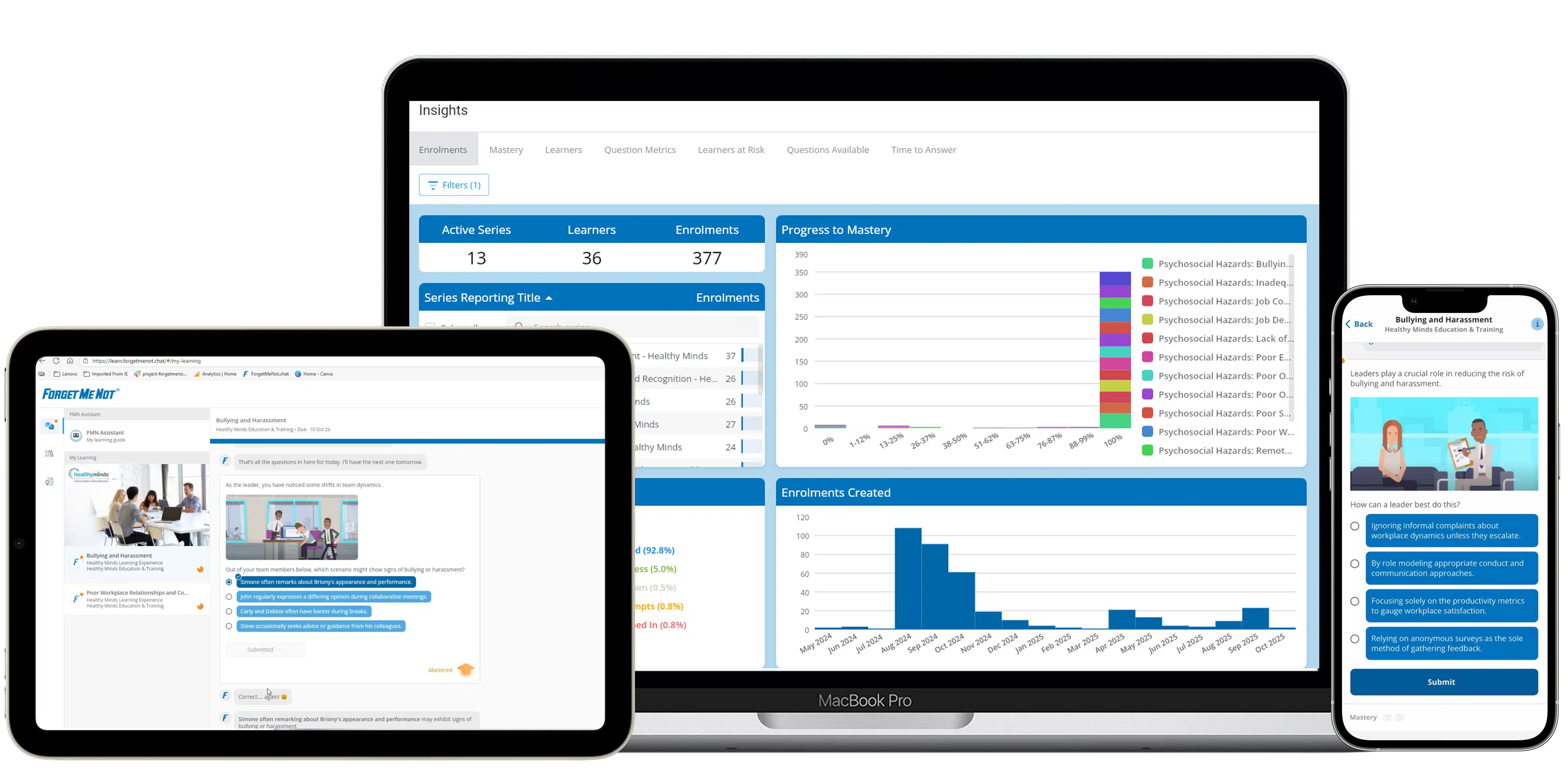
Forget Me Not®, in collaboration with Healthy Minds has designed a psychosocial hazards for leaders microlearning pathway. Unlike traditional eLearning, which often stops at compliance, our approach builds true mastery and confidence through repetition and reinforcement that fit seamlessly into a learner’s workday.
Why Forget Me Not® Works


The 13 Psychosocial Hazard Topics
Developed by Healthy Minds psychologists, our modules cover the most critical workplace risks:

Psychosocial Hazards: Bullying and Harassment
Identify, prevent, and respond to bullying and harassment to create respectful, psychologically safe workplaces.

Psychosocial Hazards: Inadequate Rewards and Recognition
Understand how lack of recognition impacts wellbeing, motivation, and retention — and how to address it effectively.

Psychosocial Hazards:
Job Control
Learn how limited autonomy and decision-making can increase stress and how to support healthy job control.

Psychosocial Hazards:
Job Demands
Recognise excessive workloads, time pressure, and emotional demands that contribute to burnout and risk.

Psychosocial Hazards: Lack of Role Clarity
Address confusion around roles, responsibilities, and expectations that can lead to stress and conflict.
Psychosocial Hazards: Poor Environmental Conditions
Identify physical and environmental factors that negatively affect psychological health and performance.

Psychosocial Hazards: Poor Organisational Change Management
Manage change in ways that reduce uncertainty, stress, and resistance during workplace transitions.

Psychosocial Hazards: Poor Organisational Justice
Understand how perceived unfairness in decisions and processes impacts trust, morale, and wellbeing.

Psychosocial Hazards:
Poor Support
Learn how insufficient managerial or peer support increases psychosocial risk — and how to strengthen it.

Psychosocial Hazards: Poor Workplace Relationships and Conflict
Build skills to prevent, identify, and resolve conflict before it escalates into psychosocial harm.

Psychosocial Hazards: Remote or Isolated Work
Address the unique psychosocial risks of working remotely, alone, or without regular supervision.

Psychosocial Hazards:
Traumatic Events
Prepare leaders to recognise, respond to, and support employees exposed to traumatic workplace incidents.
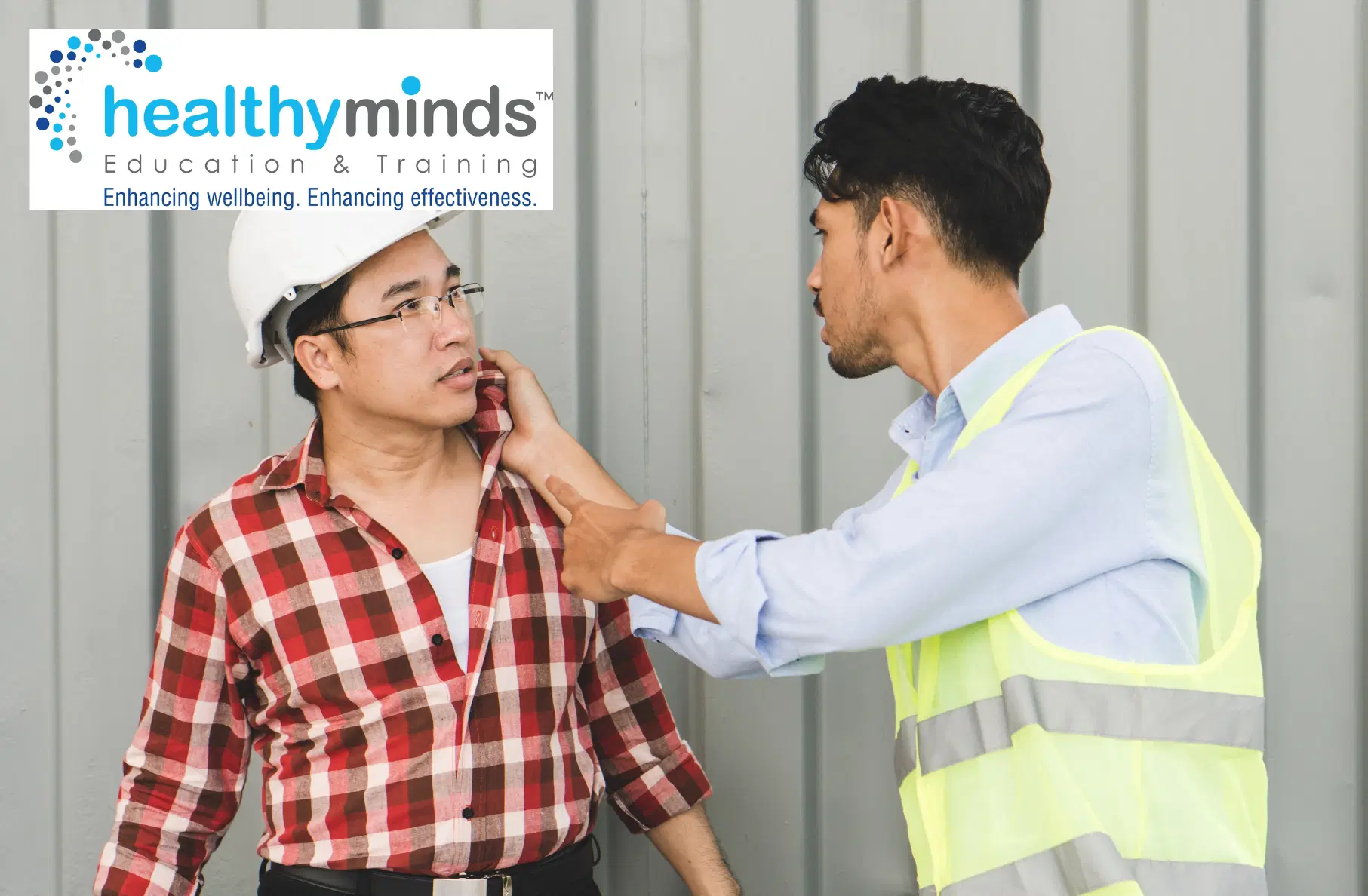
Psychosocial Hazards:
Violence and Aggression
Identify risks, early warning signs, and prevention strategies for workplace violence and aggression.
Benefits for Every Role
Employees
Have a better employee experience with managers that recognise, respond to, and prevent psychosocial hazards.
Build confidence in speaking up, feel supported during challenging situations, and work in environments where psychological safety is actively prioritised. Daily microlearning helps reinforce practical behaviours that reduce stress, improve wellbeing, and create safer, more respectful workplaces.

Managers
Learn strategies to foster psychologically safe workplaces and support teams effectively.
Managers learn practical, evidence-based strategies to support their teams, manage risk, and lead with confidence. Daily microlearning reinforces consistent behaviours that strengthen psychological safety, improve decision-making, and reduce the likelihood of issues escalating.

Organisations
Drive cultural change, reduce risk, and improve productivity through engaged, confident learners.
Building organisational capability reduces risk exposure. Forget Me Not® supports a preventative approach to psychosocial hazards by moving leaders from awareness to mastery.

Our leaders found the training easy to use and far more effective than traditional methods. Retention is higher, and the daily reinforcement keeps psychosocial hazards front of mind. It’s transforming how we lead.


Oh, absolutely. And I have already been recommending Forget Me Not® to other organisations. I think it's the way to go. I actually think it works better than an LMS.

The insights and analytics offered by Forget Me Not have enabled Eremea to address learning gaps more effectively and build on employee successes. This targeted approach has been a game-changer, ensuring that training is impactful and relevant.


Alwyndor have worked with Obvious Choice for many years, and personally I have worked with them across different industries. James Stack and his team are the elite professionals in the Learning and Development contemporary learning space. They offer tailored, value add solutions and are always across best practice. Their research into how individuals and teams learn is quite ground-breaking, and they offer practical options based on this research and their experience

Ready to Transform
Your Workplace?
Forget Me Not® is more than training — it’s a movement towards safer, healthier, and more resilient organisations.