
The Cost of Inaction

As Used & Trusted


Most conversations about psychosocial hazards still begin at the point of failure.
The claim. The fine. The regulator’s visit.
And yes, the numbers demand attention. The average psychological injury workers’ compensation claim in New South Wales has climbed to $288,542. A Victorian employer faced a $379,000 penalty for a toxic culture before national regulations were even fully embedded.
These are the direct costs. They’re visible, measurable, and impossible to ignore.
But they’re only half the story.
Because while organisations focus on what happens after something breaks, the conditions that cause the damage are left untouched.
The Direct Cost: When It Finally Surfaces
Psychological injury claims now represent 38% of the total cost of Australia’s workers’ compensation system, despite accounting for just 12% of claims.
That imbalance tells you everything.
Psychosocial injuries are complex. They take longer to resolve. The median time away from work is 35 weeks, more than four times that of physical injuries. Return-to-work pathways are slower, less predictable, and often incomplete.
By the time a claim is lodged, the system has already failed; structurally, not individually.
And when regulators step in, they’re not just assessing the incident. They’re examining the environment that allowed it to happen.
The Indirect Cost: What Happens Before the Claim
Long before a claim is filed, the cost of inaction is already compounding.
It shows up in job design.
Roles that quietly expand beyond what’s reasonable.
Workflows that create friction instead of flow.
Managers expected to lead large teams while carrying a full operational load themselves.
These aren’t edge cases. They are embedded ways of working.
And they create a slow, sustained erosion of capability.
The clearest signal is presenteeism, people who are physically at work, but cognitively depleted. Decision-making slows. Errors increase. Quality drops, not all at once, but incrementally, week after week.
Unlike compensation claims, this doesn’t trigger a formal process. There’s no single data point that captures it cleanly.
But its impact is cumulative and significant.
Research consistently shows that presenteeism costs organisations more than absenteeism. Not because it’s dramatic, but because it’s constant.
Add to that disengagement, increased turnover intent, and the quiet loss of experienced staff, and the true cost of inaction becomes harder to quantify, but far more material.
The Gap Between What We Know and What We Do
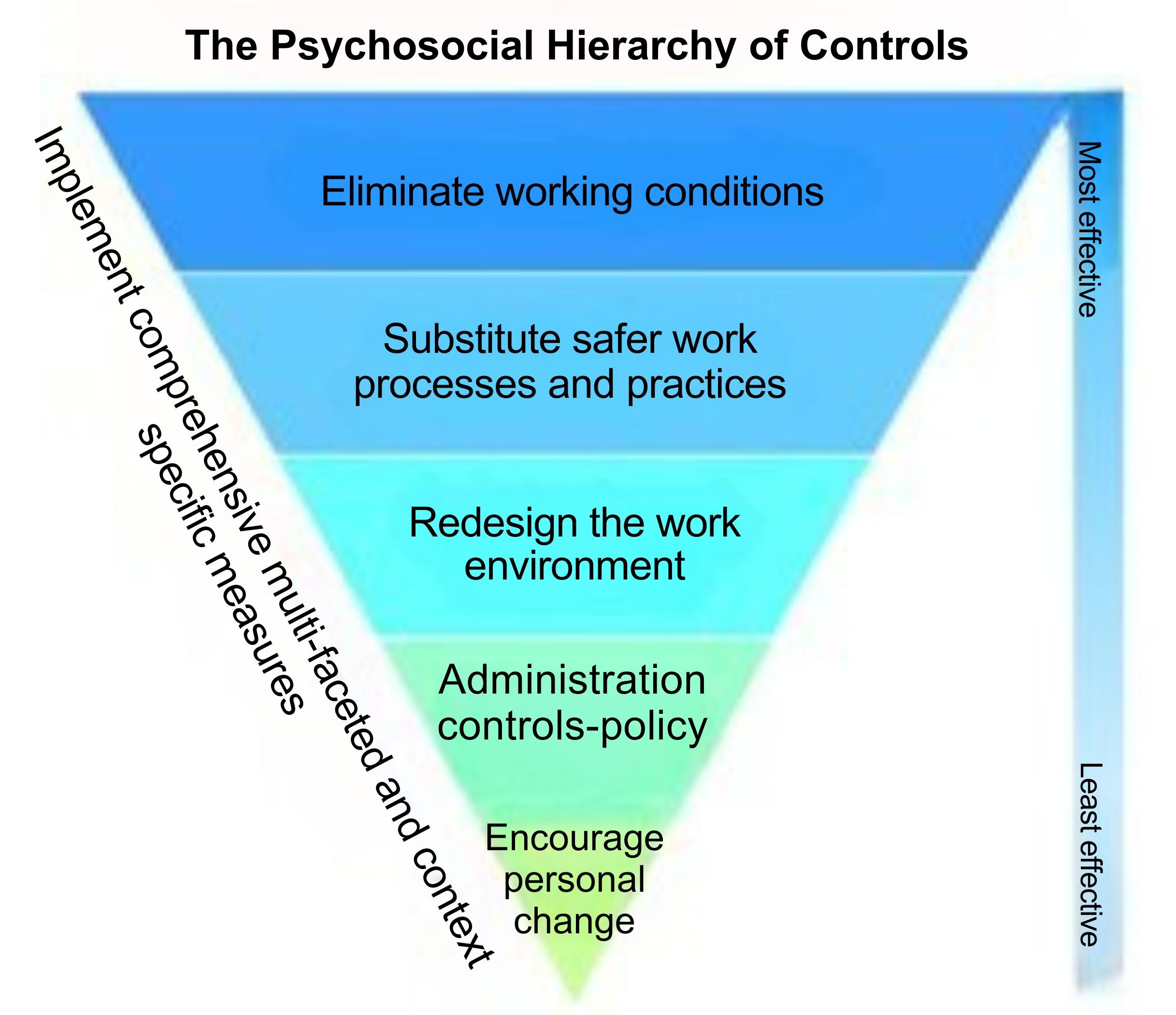
Regulation is already pointing in the right direction.
Under SafeWork NSW’s WHS Regulation 2025, organisations are required to prioritise work design and systems of work as primary controls. The expectation is clear: address hazards at the source, not just the symptoms.
But this is often a stumbling block for organisations.
Because addressing the source means asking harder questions:
- Is the scope of each role actually achievable?
- Are systems designed to support people, or to stretch them?
- Is capability built into the workflow, or left to individual resilience?
Too often, the answers reveal structural strain that has been normalised over time.
Where Capability Fits In
Training has a role but it’s only a low-level administrative control.
A one off eLearn or classroom training session is the weakest form of administrative control.
Annual sessions, disconnected from day-to-day work, don’t shift outcomes.
What does make a difference is continuous, embedded learning—where leaders can recognise psychosocial hazards in real time, and workers can see that their organisation is actively investing in their capability.
That visibility matters.
Not because training alone changes culture, but because consistent reinforcement signals intent. It tells people that the organisation is paying attention to how work is experienced, not just how it’s delivered.
The Real Cost of Doing Nothing
The direct costs—claims, time-off, insurance premiums and fines are sharp and immediate.
The indirect costs—fatigue, disengagement, declining performance, are quieter, but far more pervasive.
Both carry weight. Both compound over time.
And both stem from the same source: how work is designed.
A well-designed job isn’t a benefit. It’s a baseline responsibility.
And building capability continuously, within the flow of work, not outside it, is part of meeting that responsibility.im
Because inaction doesn’t just show up when something goes wrong.
It shows up every day you choose not to fix what’s already known.
(Sources: Safe Work Australia; NSW Treasurer Daniel Mookhey, Parliament 2025; WorkSafe Victoria, Court body fined almost $380,000 for deadly work culture; Safe Work Australia, Psychosocial Safety Climate and Better Productivity in Australian Workplaces (safeworkaustralia.gov.au); Safetysure Mental Health Claims Analysis 2025; NSW WHS Law Update — explains amendments to Reg 55C requiring psychosocial risks to be managed in accordance with the hierarchy of control measures.)
Blog Related


The 5-Minute Mentor: Evidence-based Learning Insights
Transform your team with monthly microlearning insights you can implement immediately.
